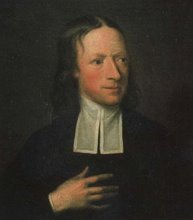
April 26, 1738. — Rev. John Wesley left the appointment of him by Trustees to
perform religious services in Georgia. The authority granted him ordered to be
revoked.
Showing posts with label Trustees of Georgia. Show all posts
Showing posts with label Trustees of Georgia. Show all posts

From the Minutes of the Trustees Feb 22, 1738
Feb. 22, 1737-8. — Rev. John Wesley delivered a narrative relating to the complaints
of Mrs. Williamson and three certificates signed by three persons.
From the Minutes of the Trustees Dec 21, 1737
Dec. 21, 1737. — Read an instruction from the King, appointing that in the
morning and evening prayers in the Litany, as well as in the occasional offices,
in the Book of Common Prayer, where the Royal Family is appointed to be particularly
prayed for, the following Form and Order : " Their Royal Highnesses
Frederic Prince of Wales, the Princess of Wales, the l)uke, the Princess, and
all the Royal Family," be forthwith published in all the parish churches and
other places of Divine worship in the Colony of Georgia, and that obedience be
paid thereto accordingly.
Ordered: That a License be made out for the Rev. Mr. George Whitefield to
perform Ecclesiastical offices in Georgia, as a deacon in the Church of England.
From the Minutes of the Trustees Dec 7, 1737
Dec. 7, 1737. — Several letters were read from Mr. Williamson at Savannah,
complaining of the Rev. John Wesley having refused the Sacrament to his wife,
Mrs. Sophia Williamson, with affidavit of latter thereupon, and two presentments
of thu Grand Jury of the Rev. John Wesley for said refusal, and for several other
facts laid to his charge.
Ordered : That copies of said letters and affidavit be sent over to the Rev. Mr.
John Wesley, desiring him to return his answers to the same as soon as possible :
and that a letter be sent to Mr. Williamson to acquaint him of said copies being
sent to Mr. Wesley, and that, if he has anything new to lay before the Trustees,
he should show it first to Mr. VVesley, and then send it over to them ; and that
the Trustees think he should not have made his application to the world, by advertising
his complaints, before he had acquainted the Trustees with them.
From the Minutes of the Trustees Nov 9, 1737
Nov. 9, 1737. — Received from Major William Cook 16 different sorts of vine
cuttings from France, for the use of the Colony.
From the Minutes of the Trustees July 27, 1737
July 27, 1737. — Received a benefaction of a person who desired to be unknown,
of a Seal for the Town Court of Savannah, with an Engine or press, &c., value £
2 5s. Town Courts of Savannah and Frederica to be courts of law for trying
offences against the act for preventing the importation and use of rum.
From the Minutes of the Trustees July 6, 1737
July 6th, 1737. — Received a Receipt from the Bank of England, for twenty
thousand pounds, received by (.he Accountant at the Exchequer, (being so much
granted the last session of Parliament, for the further securing and settling the
colony of Georgia,) and paid in by him this day to the Bank.
From the Minutes of the Trustees April 4, 1737
April 4, 1737. — A law was read against the use of gold and silver, in apparel
and furniture, in Georgia, and for preventing extravagance and luxury.
From the Minutes of the Trustees of the Governors of Georgia, Sept 26, 1735
Sept. 26, 1735. — A new town in Georgia to be laid out, to be called Frederica.
The Trustees
The Trustees, in consequence of Oglethorpe's
representations, were anxious to engage eligible men
to go out to Georgia in order to convert the Indians,
and to officiate as ministers at Savannah and a new town
about to be built on the Island of St. Simon's. Oglethorpe,
as we have seen, was acquainted with the Wesley
family, but he had not sufficient knowledge of either
John or Charles to judge of thejr fitness for the required
duties. John Wesley., now in his thirty-second
year, was a Fellow of Lincoln College, Oxford, and
Charles, aged twenty-six, a student of Christ Church.
They had attained notoriety at the University by the
strictness of their conduct ; and, as they and their
select associates lived according to certain rules of
their own, were called ' Methodists.'
Charles Wesley was completely led by his elder brother;
and John's notions were so peculiar that his pious and
learned father, when within a few months of the grave,
confessed — "I sat myself down to try if I could unravel
his sophisms, and hardly one of his assertions appeared
to me to be universally true."* However, the Rev.
Doctor Burton, a Member of the Board, who knew
John Wesley well, considered that from his abstemious-?
ness and readiness to endure hardship he was well
suited for the office of a missionary ; and in August,
1735, learning that he was in London, brought him to
Mr. Oglethorpe's house, that they might talk the matter
over. Wesley at first hesitated, but many of his
friends advised him to accept the offer, and as even his
widowed mother encouraged him to it, he at length
consented. f It was eventually determined that his
brother Charles should accompany him, also Benjamin
Ingham, one of the Oxford association, and Charles
Delamotte, the son of a London merchant.
A Memoir of General James Oglethorpe
By Robert Wright
Published 1867
Chapman and Hall Prisons
414 pages
Original from the New York Public Library
Digitized Jul 11, 2007
p. 92-93
From the Minutes of the Trustees of the Governors of Georgia, July 2, 1735
July 2, 1735. — Received from the Bank a receipt for £20,000, granted by Parliament.
Subscribe to:
Posts (Atom)