Historical and background information from the website Glynn County History and Lore. -- ed.
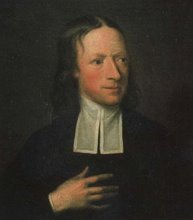
Among the immigrants which Mr. Oglethorpe brought from England were two young ministers who afterwards became very famous. John Wesley, fresh from Oxford University, came as a missionary to the Indians and a pastor to the colonists. His brother, Charles Wesley, was to serve as a private secretary to Oglethorpe. John took up his work in Savannah, making only an occasional trip to Frederica, while Charles came immediately with Oglethorpe to Frederica. His assigned task was to keep records and make reports to the Trustees, a previous failing of Mr. Oglethorpe. He soon discovered that pastoral responsibilities were his as well, so he conducted religious services and organized the settlers into a congregation which still today exists as the continuing congregation of Christ Church.
The Wesley brothers remained only a few months in the colony, however, as they really were not suited for the task...
There were two things though which made the Georgia experience of the Wesleys of great significance: 1) On shipboard and in the colony they had been greatly impressed by the Moravian immigrants. Their trusting faith and deep piety made a deep impression on them, and the future "warm hearted" religious experience and the Methodist movement were greatly influenced by this Moravian contact. 2) The first Sunday School in the world was established in Savannah by John Wesley. He brought children together on Sunday for religious instruction. This is not to take away from Robert Raikes, who is given credit for the beginning of the Sunday School movement many years later. Robert Raikes developed an important system of teaching poor children on Sunday. These children had been working in the factories or mines for long hours six days a week, so on Sunday he got them together to teach them reading, writing, and arithmetic, for this was their only opportunity to learn. But the first known instance of getting children together on Sunday for religious instruction was by John Wesley in Savannah, Georgia.
So, although the Wesley brothers were in the colony for only a few months, it was a learning, growing, maturing experience which became part of the foundation upon which the Methodist movement was to be built.
Showing posts with label Background. Show all posts
Showing posts with label Background. Show all posts

February 1736 in Georgia
from the website Glynn County, History and Lore so that those who wish to better understand the context of the Wesleys might do so. -- ed.

Arriving back in England, he [General Oglethorpe] was welcomed home with great enthusiasm. The Red Men he took with him, in native costumes, with strange sounding names, caused a sensation. Poems were written in their honor, a medal was struck to commemorate the visit and celebrations were held by nobility and common folk alike.
Oglethorpe did have several fences to mend. There had been criticism of his prohibition of rum, brandy, and other distilled spirits; and to his objection to the introduction of negro slavery into the colony. After all, these were of much profit to business and to the Crown! Yet, with eloquent presentation to Parliament of the problems brought by drink and slavery, and with the further consideration that in a military outpost everyone should bear arms (prohibited to slaves), an agreement was ratified to continue these prohibitions. Some dissatisfaction of the Trustees with the accounting of their funds was allayed when they found that Oglethorpe had expended his own fortune for the colony, proof enough of his honesty. They did deem it wise to send along a secretary to keep better records and to provide them with more complete information than they had been receiving. [Charles Wesley was selected.]
King George shared Oglethorpe's vision of Georgia's potential. The Trustees renewed their support now that they had heard first hand of the success of the colony. So now James Oglethorpe could again leave for America. This time the task ahead was a military one if he was to challenge the Spanish. Settlers for this new, exposed, frontier location need be trustworthy and industrious. They need have a variety of useful crafts and talents such as carpenter, blacksmith, farmer, doctor, shoemaker. The trustees seemed to prefer Salzburgers (persecuted Protestants from Germany) and Scottish Highlanders. So it was, that a carefully selected group of forty families-about 230 persons, only a few more than one-third of them men-arrived off Peeper Island (later known as Cockspur Island) in the mouth of the Savannah river in February, 1736.

John Wesley and Friends at Oxford

These are 22 questions the members of John Wesley's Holy Club asked themselves every day in their private devotions over 200 years ago.
- Am I consciously or unconsciously creating the impression that I am better than I relly am? In other words, am I a hypocrite?
- Am I honest in all my acts and words, or do I exaggerate?
- Do I confidentially pass on to another what was told to me in confidence?
- Can I be trusted?
- Am I a slave to dress, friends, work, or habits?
- Am I self-conscious, self-pitying, or self-justifying?
- Did the Bible live in me today?
- Do I give it time to speak to me everyday?
- Am I enjoying prayer?
- When did I last speak to someone else about my faith?
- Do I pray about the money I spend?
- Do I get to bed on time and get up on time?
- Do I disobey God in anything?
- Do I insist upon doing something about which my conscience is uneasy?
- Am I defeated in any part of my life?
- Am I jealous, impure, critical, irritable, touchy, or distrustful?
- How do I spend my spare time?
- Am I proud?
- Do I thank God that I am not as other people, especially as the Pharisees who despised the publican?
- Is there anyone whom I fear, dislike, disown, criticize, hold a resentment toward or disregard? If so, what am I doing about it?
- Do I grumble or complain constantly?
- Is Christ real to me?
From the Journals of Baron Von Reck

Of the town of Savannah the Baron Von Reck favors us with the following impressions: "I went to view this rising Town, Savannah, seated upon the Banks of a River of the same Name. The Town is regularly laid out, divided into four Wards, in each of which is left a spacious Square for holding of Markets and other publick Uses. The Streets are all straight, and the Houses are all of the same Model and Dimensions, and well contrived for Conveniency. For the Time it has been built it is very populous, and its Inhabitants are all White People.
"And indeed the Blessing of God seems to have gone along with this Undertaking; for here we see Industry honored and Justice strictly executed, and Luxury and Idleness banished from this happy Place where Plenty and Brotherly Love seem to make their Abode, and where the good Order of a Nightly Watch restrains the Disorderly and makes the Inhabitants sleep secure in the midst of a Wilderness.
"There is laid out near the Town, by Order of the Trustees, a Garden for making Experiments for the Improving Botany and Agriculture; it contains 10 Acres and lies upon the River; and it is cleared and brought into such Order that there is already a fine Nursery of Oranges, Olives, white Mulberries, Figs, Peaches, and many curious Herbs: besides which there are Cabbages, Peas, and other European Pulse and Plants which all thrive. Within the Garden there is an artificial Hill, said by the Indians to be raised over the Body of one of their ancient Emperors. I had like to have forgot one of the best Regulations made by the Trustees for the Government of the Town of Savannah. I mean the utter Prohibition of the Use of Rum, that flattering but deceitful Liquor which has been found equally pernicious to the Natives and new Comers, which seldom fails by Sickness or Death to draw after it its own Punishment.”
Image from Georgia's Virtual Vault, http://content.sos.state.ga.us/u?/hmf,2.
Entry from "The History of Georgia," By Charles Colcock Jones, Published 1883 by Houghton, Mifflin and Co., Original from the University of California
v.1, Digitized Jun 6, 2007 for Google Books. p. 170.
Letter of Samuel Everleigh
South Carolina
April 6, 1733
Gentlemen:
About three weeks since did myself the honour to go down and visit Mr. Oglethorpe. What I here remarked I caused to be published in the Carolina Gazette and sent it to Mr. Samuel Baker, merchant in London, and desired him to get it inserted in the London newspapers, which suppose by this time you have had sight of.
On Tuesday the 13th instant, I went on board a canoe, in company with Mr. George Lucat and Mr. John Ballantine, with four Negroes, and about 10 o'clock we set off from Mr. Lloyd's Bridge for Georgia, and passing by Port Royal on Wednesday night, we arrived Friday morning, an hour before day, at Yamacraw, a place so called by the Indians, but now Savannah, in the colony of Georgia. Some time before we came to the landing, the sentinel challenged us and, understanding who we were, admitted us ashore. This is a very high bluff, forty feet perpendicular from the high water mark. It lies, according to Captain Gascoign's observations, in the Latitude of 31-58, which he took off Tybee, an island that lies at the mouth of the Savannah River. It's distant from Charles Town, South West, according to the course and windings of the rivers and creeks, about 140 miles, but by a direct course of 77.
This bluff is distant 10 miles from the mouth of the rivers on the South side; and Purrysburg is 24 miles above it on the North, and is so situated that you have a beautiful prospect. Both up and down the river it's very sandy and barren, and consequently a wholesome place for a town or city. There is on it 130-odd souls; and from the time they embarked at London, to the time I left the place, there died but two sucking children, and they at sea. When they arrived, there was standing on it a great quantity of the best sorts of pine, most of which is already cut down on the spot where the town is laid out to be built. The land is barren above a mile back, when you come into very rich ground; and on both sides, within a quarter mile of the town, is choice good planting land. Colonel Bull told me that he had been seven miles back and found it extraordinarily good.
Mr. Oglethorpe is indefatigable, takes a great deal of pains; his fare is but indifferent, having little else at present but salt provisions; he's extremely well beloved by all his people: the general title they give him is Father. If any of them is sick, he immediately visits them and takes a great deal of care of them. If any difference arises, he's the person that decides it. Two happened while I was there and in my presence, and all the parties went away to outward appearance satisfied and contented with his determination. He keeps a strict discipline. I neither saw one of his people drunk, or heard one swear, all the time I was there. He does not allow them rum, but in lieu gives them English beer.
It's surprising to see how cheerfully the men goes to work, considering they have not been bred to it. There's no idlers there, even the boys and girls do their parts. There are four houses already up, but none finished; and he hopes, when he has got more sawyers, which I suppose he will have in a short time, to finish two houses a week. He has ploughed up some land, part of which he sowed with wheat, which is come up, and looks promising. He has two or three gardens, which he has sowed with divers sorts of seeds, and planted thyme, with other sorts of pot-herbs, sage, leeks, scallions, celery, licorice, &c. and several sorts of fruit trees. He was palisading the town 'round, including some part of the common, which I do suppose may be finished in a fortnight's time. In short, he has done a vast deal of work for the time, and, I think his name justly deserves to be immortalized.*
There are several other things which the printer for want of room could not put in. I carried down with me a great bundle of asparagus and as soon as he received it he ordered it to be given [to] the women with child, without reserving any for himself. There's about a 11 foot at high water on the bar, which I look upon to be of advantage to a young settlement, for in case of war no vessel of force can enter to disturb them. While
I was there Mr. Oglethorpe gave Captain's commissions to two of the chief Indian warriors together with some presents, at which they seemed well satisfied and promised to do him what service they could. Excuse me, Gentlemen, if I take the liberty to make one remark: Mr. Oglethorpe told me that by their constitution they were to have no Negroes amongst them, which I think will be a great prejudice if not means to overset your noble design. For there is a vast quantity of extraordinary fine land which [is] plentifully stored with large trees, which I can't think can be felled by persons that are not used to work. And they can't there live without corn. Besides, it will be very difficult for white people to hoe and tend their corn in the hot weather, for I do assure you I think 'tis equally as hot as ever I felt in Jamaica in the summer months, which I compute to be from the middle of May to the middle of September. Mr. Oglethorpe once a week puts up a turkey or some other thing of value to be shot for by his men, which has already had good effect, bringing them acquainted with arms which some of them before were ignorant of. He sent me down a small cask of skins which I have shipped on board the Volant, Edmund Smyler, and consigned to my friend Mr. Samuel Baker, with some of my own, who will enter them and deliver them to you, which will save you some trouble and charge. When I was at Georgia I acquainted Mr. Oglethorpe that there was on the island and on the main next to the sea such vast quantities of live oak trees as is not to be seen in any part of the world, besides the sufficient to build more ships than the British Navy consists of, which for its durableness and crookedness of growth suitable for all difficult timbers, is preferable to English or any other oak whatsoever, as one Mr. Barry who was bred in His Majesty's [ship]yard, if alive can inform you. He married Bella Ash, the daughter of John Ash, Esquirem formerly of this province. She's a relation, as I have been informed, of the Lord Townsend's and St. Paul Methuen. I wrote you this that you may know how to find her. I design in three weeks' time to get some carpenters to cut several pieces of these timbers and send you some for a trial. Since I wrote the above, I am informed that the said was living within these three years and was foreman of His Majesty's yard of Deptford. I am, Gentlemen, your very humble servant.
Subscribe to:
Posts (Atom)