To Richard Morgan [2]
March 15, 1734.
SIR, -- A journey which I was obliged to begin very soon after the receipt of yours was the occasion of my delaying so long to answer it, which I should otherwise have done immediately. I am satisfied you never designed to give me any uneasiness, either by your last or any of your preceding letters, and am very sensible that the freedom you used therein proceeded from a much kinder intention. And should you ever say anything which I could not approve of, I should as soon as possible mention it to you as the only sure way either to prevent any misunderstanding between us, or at least to hinder its long continuance.
As to your son's being a member of our little Society, I once more assure you with all plainness that, were you as much for it as you appear to be against it, I should think it my duty to oppose it to the utmost. I do not conceive him to be any ways qualified for it, and would as soon advise one of his dispositions to go and convert the Indies as to minister to his fellow Christians in the manner wherein my dear friends by the grace of God endeavor to do.
I have over and over pressed him to cultivate his acquaintance with Mr. Batteley, [See letter of Jan. 31.] and several other gentlemen of Christ Church, whose characters I am well acquainted with, though little or not at all with their persons. I have seen an answer from Mr. Hulton of Chester to his letter concerning the greyhound, which I hope we shall very shortly have an opportunity of returning to him. Mr. Morgan constantly attends public prayers, nor do I know that he omits private, or willfully runs into any known sins of commission; and I trust he never will.
Whether a person who goes thus far, who uses public and private prayer and avoids sins of commission, be a good Christian, is a question which you beg we may drop for the future, because it is not your province to determine it. Alas, sir, you ask what I have no power to grant. When both the glory of my Savior and the safety of your soul so loudly require me to speak, I may not, I dare not, I cannot be silent, especially when I consider the reason you give for my being so--viz. that it is not your province to manage this point of controversy. No! Are you not, then, in covenant with Christ? And is it not your province to know the terms of that covenant? 'This do, and thou shalt live,' saith the Lord of life. Is it not your business to understand what this is? Though you are no divine, is it not your concern to be assured what it is to be a Christian? If on this very point depends your title either to life or death eternal, how shall I avoid giving you what light I can therein without the deepest wound to my own conscience, the basest ingratitude to my friend, and the blackest treachery to my Master?
The question, then, must be determined some way; and for an infallible determination of it, to the law and to the testimony we appeal: at that tribunal we ought to be judged; if the oracles of God are still open to us, by them must every doubt be decided. And should all men contradict them, we could only say, ' Let God be true, and every man a liar.' We can never enough reverence those of the Episcopal Order. They are the angels of the Church, the stars in the right hand of God. Only let us remember he was greater than those who said, ' Though I or an angel from heaven preach any other gospel than that ye have received, let him be accursed.'
Now, the gospel we have received does in no wise allow him to be a follower of Christ, to do his duty to God and man, who is constant in public and private prayer and avoids sins of commission. It supposes there are such things as sins of omission too. Nay, it is notoriously evident that in our Lord's account of His own proceedings at the Great Day there is no mention of any other. It is for what they have not done that the unprofitable servants are condemned to utter darkness. O sir, what would it avail in that day could you confront our Lord with five thousand of His own ambassadors protesting with one voice against His sentence, and declaring to those on the left hand that He had never said any such thing: that He condemned them for omitting what He had nowhere required them to do; that they were faithful because they were only unprofitable servants; that they ought to be ranked in the class of good Christians because they had only broken all the positive laws of Christ; that they had done their duty both to God and man, for they had prayed to God and done neither good nor harm to their neighbor. For God's sake, sir, consider, how would this plea sound? Would it really be received in arrest of judgment? or would the Judge reply, ' Out of thy own mouth will I judge thee, thou wicked and slothful servant! Did I require nothing to be done, as well as to be avoided? Was an eternal reward promised to no-work? Were My positive laws no laws at all? Was the pattern I set thee negative only? But thou hast done thy duty to God at least, for thou hast prayed to Him! What didst thou pray for? For My Spirit to help thy infirmities? For strength to tread in My steps? For power, not only to avoid all sin, but to fulfill all righteousness? Didst thou pray that thy righteousness might exceed that of the Scribes and Pharisees? -- might not rest in externals, but be an inward vital principle? Didst thou pray for a clean heart? for the renewal of thy mind? for a right spirit duly conformed to My image? Didst thou pray for a soul continually ardent to do My will on earth as it is done in heaven? If thou prayedst for anything short of this, or if praying for this thy heart went not along with thy lips, thou prayedst as a fool or an heathen prayed; and thy prayer itself was the greatest of thy abominations. If thou didst pray for this power which I had promised not to any particular order but to every one of My disciples earnestly desiring it, why went not thy endeavor along with thy prayer? Because great men, the chief priests and eiders, said it need not? Whom, then, oughtest thou to have believed, Me or them? Behold, I had told thee before: obey God rather than men. Thy blood be on thy own head.'
Whether divines and bishops will agree to this I know not; but this I know, it is the plain word of God. God everywhere declares (x) that without doing good as well as avoiding evil shall no flesh living be justified; (2) that as good prayers without good works attending them are no better than a solemn mockery of God, so are good works themselves without those tempers of heart from their subserviency to which they derive their whole value; (3) that those tempers which alone are acceptable to God, and to procure acceptance for which our Redeemer lived and died, are (i) Faith, without which it is still impossible either to please Him or to overcome the world; (if) Hope, without which we are alienated from the life of God and strangers to the covenant of promise; and (iii) Love of God and our neighbor for His sake, without which, though we should give all our goods to feed the poor, yea and our bodies to be burned, if we will believe God, it profiteth us nothing.
I need say no more to show with what true respect and sincerity I am, dear sir,
Your most obliged and ever obedient servant.
[This closes the important Morgan correspondence. It is pleasant to add that after a time Richard Morgan was led to take a different view of religious matters. John Gumbold says James Hervey's easy and engaging conversation gained the young man's heart to the best purpose. Charles Wesley tells his brother Samuel on July 31, 1734: ' Mr. Morgan is in a fairer way of becoming a Christian than we ever yet knew him ' (Priestley's Letters, p. 16). When the Wesleys sailed for Georgia, Morgan bade them good-bye at Gravesend and helped to carry on their work at Oxford. He wrote to Wesley in i735 expressing an earnest desire to go to Georgia, but returned to Ireland, where he married Miss Dorothy Mellor, and settled in Dublin, He was called to the Bar, and was associated with his father in the office of Second Remembrancer of the Court of Exchequer, which became his exclusively on his father's death in 1752. Wesley visited his ' old friend' on July 15, 1769. See Journal, viii. 264, 268; Crookshank's Methodism in Ireland, i. 12; W.H.S. iii. 49; and letter of April 28, 1775.]

[The following is part of Morgan's letter to his son enclosed in the above to Wesley:]
January 31, 1734.
What, Dick, did you so soon forget our stipulations and conditions on your going to the University, as to carry a greyhound with you to Oxford, and to attempt keeping him in your college, contrary to the rules of it? Did not you promise to stick to your studies and be as subservient to your tutor as if you were a servitor? I vowed to you before, and now I vow again, that if you follow an idle, vicious, or extravagant life, you shall never inherit my fortune. You are now in the hands of a gentleman (it is my happiness and so you may reckon it too) that has more honor and conscience than to conceal your faults from me. Your duty to God is always in the first place to be duly attended. Go to bed by times; rise early. Omit no one college duty. Squander not away the morning in tea and chat. Never be seen out of your chamber in studying hours. For the rest I refer to your good tutor, who I am sure will not be wanting in his instructions to you without engaging you in that Society which I am not for. Banish your dog immediately. Quid de quoque viro, et cui discus saepe cavito. [Horace's Epistles, I. xviii. 68: ' Beware what you say about any one and to whom you say it.'] Always imagine what you do will be known.
January 31, 1734.
What, Dick, did you so soon forget our stipulations and conditions on your going to the University, as to carry a greyhound with you to Oxford, and to attempt keeping him in your college, contrary to the rules of it? Did not you promise to stick to your studies and be as subservient to your tutor as if you were a servitor? I vowed to you before, and now I vow again, that if you follow an idle, vicious, or extravagant life, you shall never inherit my fortune. You are now in the hands of a gentleman (it is my happiness and so you may reckon it too) that has more honor and conscience than to conceal your faults from me. Your duty to God is always in the first place to be duly attended. Go to bed by times; rise early. Omit no one college duty. Squander not away the morning in tea and chat. Never be seen out of your chamber in studying hours. For the rest I refer to your good tutor, who I am sure will not be wanting in his instructions to you without engaging you in that Society which I am not for. Banish your dog immediately. Quid de quoque viro, et cui discus saepe cavito. [Horace's Epistles, I. xviii. 68: ' Beware what you say about any one and to whom you say it.'] Always imagine what you do will be known.
From Richard Morgan to John Wesley
DUBLIN, January 31, 1734.
REVEREND SIR, I am favored with yours of the 15th, and am very sorry that my last letter has been the occasion of any disquietude to you, which I am sure I never designed. When, out of the friendship that had been contracted between us, and the good opinion I had both of yours and your brother's sincerity and judgment, I determined chiefly on your advice to send my son to the University, I did not imagine that it would be expected he should join in that strict Society which it was known I disliked in my other son; upon this confidence you know I did not offer the least caution against it in my former letters, nor did you in your first letter give any intimation that you expected it, having only expostulated on both sides on the subject of his learning, and thus, preliminaries being, as I thought, happily fixed, I was easy. But afterwards I was greatly surprised and alarmed to find you insist in your letter of the 6th of November that he must keep company with those and only those whom you approve of, with other hints tending that way. Then, indeed, the melancholy end of my other son, and the hazard of my only son being led the same way, made deep impressions on me, and my friends observed me melancholy upon it for some time; my fears and trouble increasing when I saw a letter from Mr. Buttely of Christ Church,[Oliver, son of Nicholas Buttely (or Butteicy) of Canterbury, matriculated June 8, 1716, age 19, D.D. 1734, Junior Proctor 1731. Samuel, son of John Buttely of Horringer, Suffolk, matriculated Dec. 13, 1733, age 17. See Foster's Allumni Oxonienses, where both names appear.] complaining that he had twice invited my son to his chambers, but that he did not come. Then I concluded from the expressions in your letter that he was to be confined to the company of the gentlemen of that Society. Yet, under all these apprehensions and uneasiness, I forbore in my letter to you to make any reflections upon the words of your letter, but urged only from the tragical experience in my other son the danger I apprehended of young people's engaging in the same way; and I thought that the dismal account I gave of my poor son (which nothing but my fears about my other son would have made me mention) would rather have met with pity to me than reproaches.
Now, I must tell you that I respect and adore both you and every gentleman of that strict religious Society that you are engaged in, and doubt not but you will meet with an exalted seat in heaven. I could even wish to be among you, as I formerly hinted to you; yet I must be of the same opinion still, that it is a dangerous experiment for young people to venture upon, which I think the example I gave you in my last sufficiently proves; and if it were necessary, I could give you several other examples how too great a zeal for piety and religion has carried injudicious people into madness. But, supposing it be a doubtful case whether it be advisable for a youth to unite in this Society or not (as sure it must at least be allowed to be from the diversity of opinions about it), how must I determine the question? You argue very rationally and piously for it; and five able divines, some of them bishops, men of remarkable piety and learning, of my intimate acquaintance, warn me of the danger of it: then surely from the common ends of prudence and judgment, it is plain how I ought to determine.
I agree with you in one thing, that from my son's gaiety and inclination to pleasures (I cannot say more than were innocent) I had the less reason to fear his falling into too strict a course of life, and this I observed to a certain divine in discoursing with him on that subject, when he heard that you were to be his tutor; but he answered that the danger was the greater, that, if such a volatile temper should take a turn that way, he might plunge into deeper extremes than graver persons, and that I did not know what the influence of a tutor might bring to pass. God grant that he does and will continue to do what he has told you, viz. constantly say his prayers at home and in the chapel; and then I will venture to say {though I am no divine), if he also avoids sins of commission, that he may be ranked in the class of good Christians. It is neither my province, nor am I any way equal to you, to manage this point of controversy; therefore I beg we may drop it for the future. If I have said anything in this or my former letter that is disagreeable to you (for I assure you I would do nothing willingly to disoblige you), I hope you will forgive me and impute it to my too great anxiety for the welfare of my son, and believe that there is nothing I covet more than his living a good life and doing his duty both to God and man, which I think is generally the wish of even a wicked parent; and as I am not notoriously so, I hope I am not to be suspected as encouraging my son to depart from the right way.
The enclosed letter, which I have left open for your perusal, shows how desirous I am that he should obediently submit to your authority and government, &c. I would never have sent him to the University, trusting to the common care of a tutor, after the long habit he had of pleasure and idleness. My dependence on yours or your brother's more than ordinary care of him made me venture upon it, and I hope nothing has happened to create any indifference in you towards him.
The former part of your letter I am come now to answer in the last place, and do assure you that I never received the letter you mention, of which you saw the rough draft upon his table, nor any-th'mg like it. His last letter that I received was of the 6th of November, and in that, and in every letter that he made any mention of you in, he did it with great respect to you, and expressions of your civilities and kindness to him.
I now conclude with all fervent wishes, and desire for his and all our happiness in this and the next world, dear sir,
Your truly affectionate, most obliged, humble servant,
RICHARD MORGAN.
DUBLIN, January 31, 1734.
REVEREND SIR, I am favored with yours of the 15th, and am very sorry that my last letter has been the occasion of any disquietude to you, which I am sure I never designed. When, out of the friendship that had been contracted between us, and the good opinion I had both of yours and your brother's sincerity and judgment, I determined chiefly on your advice to send my son to the University, I did not imagine that it would be expected he should join in that strict Society which it was known I disliked in my other son; upon this confidence you know I did not offer the least caution against it in my former letters, nor did you in your first letter give any intimation that you expected it, having only expostulated on both sides on the subject of his learning, and thus, preliminaries being, as I thought, happily fixed, I was easy. But afterwards I was greatly surprised and alarmed to find you insist in your letter of the 6th of November that he must keep company with those and only those whom you approve of, with other hints tending that way. Then, indeed, the melancholy end of my other son, and the hazard of my only son being led the same way, made deep impressions on me, and my friends observed me melancholy upon it for some time; my fears and trouble increasing when I saw a letter from Mr. Buttely of Christ Church,[Oliver, son of Nicholas Buttely (or Butteicy) of Canterbury, matriculated June 8, 1716, age 19, D.D. 1734, Junior Proctor 1731. Samuel, son of John Buttely of Horringer, Suffolk, matriculated Dec. 13, 1733, age 17. See Foster's Allumni Oxonienses, where both names appear.] complaining that he had twice invited my son to his chambers, but that he did not come. Then I concluded from the expressions in your letter that he was to be confined to the company of the gentlemen of that Society. Yet, under all these apprehensions and uneasiness, I forbore in my letter to you to make any reflections upon the words of your letter, but urged only from the tragical experience in my other son the danger I apprehended of young people's engaging in the same way; and I thought that the dismal account I gave of my poor son (which nothing but my fears about my other son would have made me mention) would rather have met with pity to me than reproaches.
Now, I must tell you that I respect and adore both you and every gentleman of that strict religious Society that you are engaged in, and doubt not but you will meet with an exalted seat in heaven. I could even wish to be among you, as I formerly hinted to you; yet I must be of the same opinion still, that it is a dangerous experiment for young people to venture upon, which I think the example I gave you in my last sufficiently proves; and if it were necessary, I could give you several other examples how too great a zeal for piety and religion has carried injudicious people into madness. But, supposing it be a doubtful case whether it be advisable for a youth to unite in this Society or not (as sure it must at least be allowed to be from the diversity of opinions about it), how must I determine the question? You argue very rationally and piously for it; and five able divines, some of them bishops, men of remarkable piety and learning, of my intimate acquaintance, warn me of the danger of it: then surely from the common ends of prudence and judgment, it is plain how I ought to determine.
I agree with you in one thing, that from my son's gaiety and inclination to pleasures (I cannot say more than were innocent) I had the less reason to fear his falling into too strict a course of life, and this I observed to a certain divine in discoursing with him on that subject, when he heard that you were to be his tutor; but he answered that the danger was the greater, that, if such a volatile temper should take a turn that way, he might plunge into deeper extremes than graver persons, and that I did not know what the influence of a tutor might bring to pass. God grant that he does and will continue to do what he has told you, viz. constantly say his prayers at home and in the chapel; and then I will venture to say {though I am no divine), if he also avoids sins of commission, that he may be ranked in the class of good Christians. It is neither my province, nor am I any way equal to you, to manage this point of controversy; therefore I beg we may drop it for the future. If I have said anything in this or my former letter that is disagreeable to you (for I assure you I would do nothing willingly to disoblige you), I hope you will forgive me and impute it to my too great anxiety for the welfare of my son, and believe that there is nothing I covet more than his living a good life and doing his duty both to God and man, which I think is generally the wish of even a wicked parent; and as I am not notoriously so, I hope I am not to be suspected as encouraging my son to depart from the right way.
The enclosed letter, which I have left open for your perusal, shows how desirous I am that he should obediently submit to your authority and government, &c. I would never have sent him to the University, trusting to the common care of a tutor, after the long habit he had of pleasure and idleness. My dependence on yours or your brother's more than ordinary care of him made me venture upon it, and I hope nothing has happened to create any indifference in you towards him.
The former part of your letter I am come now to answer in the last place, and do assure you that I never received the letter you mention, of which you saw the rough draft upon his table, nor any-th'mg like it. His last letter that I received was of the 6th of November, and in that, and in every letter that he made any mention of you in, he did it with great respect to you, and expressions of your civilities and kindness to him.
I now conclude with all fervent wishes, and desire for his and all our happiness in this and the next world, dear sir,
Your truly affectionate, most obliged, humble servant,
RICHARD MORGAN.
Letter of James Oglethorpe
JAMES OGLETHORPE TO THE TRUSTEES
From Camp near Savannah
February 10, 1733
Gentlemen:
I gave you an account in my last of our arrival at Charles Town. The Governour and Assembly have given us all possible encouragement. Our people arrived at Beaufort on the 20th of January, where I lodged them in some new barracks built for the soldiers whilst I went myself to view the Savannah River. I fixed upon a healthy situation about ten miles from the sea. The river there forms a half moon, along the South side of which the banks are about 40 foot high and upon the top a flat which they call a bluff. The plain high ground extends into the country five or six miles and along the riverside about a mile. Ships that draw twelve foot water can ride within ten yards of the bank. Upon the riverside in the center of this plain, I have laid out the town. Over against it is an island of very rich land fit for pasturage, which I think should be kept for the Trustees' cattle. The river is pretty wide, the water fresh. And from the quay of the town you see its whole course to the sea with the Island of Tybee, which forms the mouth of the river; and the other way you may see the river for about six miles up into the country. The landscape is very agreeable, the stream being wide and bordered with high woods on both sides. The whole people arrived on the first of February. At night their tents were got up. 'Till the 7th we were taken up in unloading and making a crane, which I even then could not get finished so took off the hands and set some to the fortification and begun to fell the woods. I marked out the town and common. Half of the former is already cleared, and the first house was begun yesterday in the afternoon. Not being able to get Negroes, I have taken ten of the Independent Company to work for us, for which I make them an allowance. I send you a copy of the Resolutions of the Assembly and the Governour and Council's letter to me, which you may judge whether it will not be proper to print. Mr. Whitaker has given us one hundred head of cattle. Colonel Bull, Mr. Barlow, Mr. Julian and Mr. Woodward are come up to assist us with some of their own servants. Our people are all alive, but ten are ill with the bloody flux,* which I take to proceed from the cold ant their not being accustomed to lie in tents. I am so taken up in looking after a hundred necessary things that I write now short but shall give you a more particular account hereafter. A little Indian Nation, the only one within fifty miles, is not only at amity but desire to be subject of the Trustees, to have land given them and to breed their children at our schools. Their chief and his beloved man, who is the second man in the Nation, desire to be instructed in the Christian religion. I am, Gentlemen, you most obedient, humble servant.
*Dysentery (formerly known as flux or the bloody flux) is an infection of the digestive system that results in severe diarrhea containing mucus and blood in the feces and is typically the result of unsanitary water containing micro-organisms which damage the intestinal lining. There are two major types of dysentery due to micro-organisms: amoebic dysentery, and bacillary dysentery mainly due to one of three bacteria. (From Wikipedia, June 14, 2008)
From Camp near Savannah
February 10, 1733
Gentlemen:
I gave you an account in my last of our arrival at Charles Town. The Governour and Assembly have given us all possible encouragement. Our people arrived at Beaufort on the 20th of January, where I lodged them in some new barracks built for the soldiers whilst I went myself to view the Savannah River. I fixed upon a healthy situation about ten miles from the sea. The river there forms a half moon, along the South side of which the banks are about 40 foot high and upon the top a flat which they call a bluff. The plain high ground extends into the country five or six miles and along the riverside about a mile. Ships that draw twelve foot water can ride within ten yards of the bank. Upon the riverside in the center of this plain, I have laid out the town. Over against it is an island of very rich land fit for pasturage, which I think should be kept for the Trustees' cattle. The river is pretty wide, the water fresh. And from the quay of the town you see its whole course to the sea with the Island of Tybee, which forms the mouth of the river; and the other way you may see the river for about six miles up into the country. The landscape is very agreeable, the stream being wide and bordered with high woods on both sides. The whole people arrived on the first of February. At night their tents were got up. 'Till the 7th we were taken up in unloading and making a crane, which I even then could not get finished so took off the hands and set some to the fortification and begun to fell the woods. I marked out the town and common. Half of the former is already cleared, and the first house was begun yesterday in the afternoon. Not being able to get Negroes, I have taken ten of the Independent Company to work for us, for which I make them an allowance. I send you a copy of the Resolutions of the Assembly and the Governour and Council's letter to me, which you may judge whether it will not be proper to print. Mr. Whitaker has given us one hundred head of cattle. Colonel Bull, Mr. Barlow, Mr. Julian and Mr. Woodward are come up to assist us with some of their own servants. Our people are all alive, but ten are ill with the bloody flux,* which I take to proceed from the cold ant their not being accustomed to lie in tents. I am so taken up in looking after a hundred necessary things that I write now short but shall give you a more particular account hereafter. A little Indian Nation, the only one within fifty miles, is not only at amity but desire to be subject of the Trustees, to have land given them and to breed their children at our schools. Their chief and his beloved man, who is the second man in the Nation, desire to be instructed in the Christian religion. I am, Gentlemen, you most obedient, humble servant.
*Dysentery (formerly known as flux or the bloody flux) is an infection of the digestive system that results in severe diarrhea containing mucus and blood in the feces and is typically the result of unsanitary water containing micro-organisms which damage the intestinal lining. There are two major types of dysentery due to micro-organisms: amoebic dysentery, and bacillary dysentery mainly due to one of three bacteria. (From Wikipedia, June 14, 2008)
Wesley’s Letters: 1734
From Richard Morgan to his Father [1]
Oxon, January 14, 1734.
HONOURED SIR, -- I received your kind letter of the 22nd November, which came free. I perused yours to Mr. Wesley very carefully, then sealed it and delivered it to him. When he had read it over two or three times, he desired me to breakfast with him next morning. His whole discourse turned on the contents of your letter. He said he did not know what to make of it, and was surprised that a father should show so great concern lest his son should not be wicked enough, and went on after that odd manner, He endeavored to prove that my brother did not weaken his constitution by his great abstinence and strictness in religion; though my brasier's wife, an intimate of Mr. Wesley's, told me she has often heard Dr. Frewin [See letter of June 13, 1753.] say that, while he persisted in that rigid course of life, he could be of no service to him.
There is a Society of gentlemen, consisting of seven members, whom the world calls Methodists, of whom my tutor is President. They imagine they cannot be saved if they do not spend every hour, nay minute, of their lives in the service of God. And to that end they read prayers every day in the common jail, preach every Sunday, and administer the sacrament once every month. They almost starve themselves to be able to relieve the poor and buy books for their conversion. They endeavor to reform notorious whores and allay spirits in haunted houses. They fast two days in the week, which has emaciated them to that degree that they are a frightful sight. One of them had like to have lost his life lately by a decay, which was attributed to his great abstinence. They rise every day at five of the clock, and till prayers, which begin at eight, they [In another copy it reads 'spend in singing Psalms, and reading the Bible and Nelson's Works. They also receive the holy sacrament every Sunday. In short, they have made themselves so particular that they are the jest, not only of the scholars, but of the Fellows and the whole University. They meet at each other's rooms at six of the clock five nights in the week, the other two they spend in private.'] sing psalms, and read some piece of divinity. They meet at each other's rooms at six of the clock five nights in the week, and from seven to nine read a piece of some religious book. In short, they are so particular that they are become the jest of the whole University.
When I came to college, my tutor gave me two rules in writing, which he expected I should follow. The first was to have no company but what he approved of, and the second to read no books but of his choosing. In compliance with the first, I have spent every evening of their meeting from seven to nine in their company till I received your letter. From six to seven they read over the petitions of poor people and relieve their wants, dispose of pious books, and fix the duties of the ensuing day. They told me very solemnly that, when I had acquired a pretty good stock of religion, they would take me in as an assistant. When we are all met, my tutor reads a collect to increase our attention; after that a religious book is read all the time we are together. They often cry for five minutes for their sins; then lift up their heads and eyes, and return God thanks for the great mercies He has showed them in granting them such repentance, and then laugh immoderately as if they were mad. The greatest blessing next to that is being laughed at by the world, which they esteem a sufficient proof of the goodness and justness of their actions, for which they also return thanks as aforesaid. Though some of them are remarkable for eating very heartily on gaudy-days, they stint themselves to two pence meat, and a farthing bread, and a draught of water when they dine at their own expense; and as for supper, they never eat any. There is a text in the Revelation which says that a man had better be very wicked than lukewarm. This Mr. Wesley explained thus: that there is no medium in religion; that a man that does not engage himself entirely in the practice of religion is in greater fear of damnation than a notorious sinner. When I considered that I was in the middle state, I grew very uneasy, and was for several days in a kind of religious madness, till I was convinced by a sermon of Dr. Young's, which gives those words a quite different meaning.
Mr. Wesley often says that it is madness in any man to leave off reading at the end of the eleventh hour if he can improve himself by the twelfth. This rule he expects his pupils to observe. I have not been an hour idle since I came to college but when I walk for my health, which he himself advises. He also expects that I should spend an hour every day before prayers in reading Nelson's Works, which I have complied with. He has lectured me scarce in anything but books of devotion. He has given me a book of Mr. Nelson to abridge this Christmas. By becoming his pupil I am stigmatized with the name of a Methodist, the misfortune of which I cannot describe. For what they reckon the greatest happiness, namely, of being laughed at, to me is the greatest misery. I am as much laughed at and despised by the whole town as any one of them, and always shall be so while I am his pupil. The whole College makes a jest of me, and the Fellows themselves do not show me common civility, so great is their aversion to my tutor. In short, laboring under all these disadvantages, I am grown perfectly melancholy, and have got such an habit of sighing, which I cannot avoid, that it must certainly do me great mischief. Soon after I came to college the Rector favored me with his company and cautioned me against Mr. Wesley's strict notions of religion, and told me that the character of his Society prevented several from entering in the College. You are pleased in both your letters to express a great regard for my welfare; for which I hope you shall find a grateful return in me. And as I myself ought to contribute all in my power thereto, I think it incumbent upon me to inform you that it is my opinion that if I am continued under Mr. Wesley I shall be ruined.
For though you should caution him ever so much, he will endeavor to make me as strict as himself; and will say, as he did to part of your letter, that we are not obliged to obey our fathers in anything that contradicts the laws of God. We have but one tutor more in the College, who is reckoned one of the best tutors in the University; and my Lord Lichfield has so great an opinion of him, that he will send his eldest son to be taken care of by him. He has what few are in college (except one Gentleman Commoner and two servitors who are Mr. Wesley's pupils) under his tuition. The character which I presume Mr. Wesley has given of me will, I hope, convince you that I have no view of being idle to occasion this removal. I am so well assured that any prospect I can have of enjoying any part of your fortune depends so much on my good behavior, that I would not propose it if I thought I would not be as diligent under him as Mr. Wesley. Though I have the greatest desire to improve myself, I would choose to return to my office, and forgo the advantages of an University education, rather than suffer what I do at present by being his pupil.
From Richard Morgan to his Father [1]
Oxon, January 14, 1734.
HONOURED SIR, -- I received your kind letter of the 22nd November, which came free. I perused yours to Mr. Wesley very carefully, then sealed it and delivered it to him. When he had read it over two or three times, he desired me to breakfast with him next morning. His whole discourse turned on the contents of your letter. He said he did not know what to make of it, and was surprised that a father should show so great concern lest his son should not be wicked enough, and went on after that odd manner, He endeavored to prove that my brother did not weaken his constitution by his great abstinence and strictness in religion; though my brasier's wife, an intimate of Mr. Wesley's, told me she has often heard Dr. Frewin [See letter of June 13, 1753.] say that, while he persisted in that rigid course of life, he could be of no service to him.
There is a Society of gentlemen, consisting of seven members, whom the world calls Methodists, of whom my tutor is President. They imagine they cannot be saved if they do not spend every hour, nay minute, of their lives in the service of God. And to that end they read prayers every day in the common jail, preach every Sunday, and administer the sacrament once every month. They almost starve themselves to be able to relieve the poor and buy books for their conversion. They endeavor to reform notorious whores and allay spirits in haunted houses. They fast two days in the week, which has emaciated them to that degree that they are a frightful sight. One of them had like to have lost his life lately by a decay, which was attributed to his great abstinence. They rise every day at five of the clock, and till prayers, which begin at eight, they [In another copy it reads 'spend in singing Psalms, and reading the Bible and Nelson's Works. They also receive the holy sacrament every Sunday. In short, they have made themselves so particular that they are the jest, not only of the scholars, but of the Fellows and the whole University. They meet at each other's rooms at six of the clock five nights in the week, the other two they spend in private.'] sing psalms, and read some piece of divinity. They meet at each other's rooms at six of the clock five nights in the week, and from seven to nine read a piece of some religious book. In short, they are so particular that they are become the jest of the whole University.
When I came to college, my tutor gave me two rules in writing, which he expected I should follow. The first was to have no company but what he approved of, and the second to read no books but of his choosing. In compliance with the first, I have spent every evening of their meeting from seven to nine in their company till I received your letter. From six to seven they read over the petitions of poor people and relieve their wants, dispose of pious books, and fix the duties of the ensuing day. They told me very solemnly that, when I had acquired a pretty good stock of religion, they would take me in as an assistant. When we are all met, my tutor reads a collect to increase our attention; after that a religious book is read all the time we are together. They often cry for five minutes for their sins; then lift up their heads and eyes, and return God thanks for the great mercies He has showed them in granting them such repentance, and then laugh immoderately as if they were mad. The greatest blessing next to that is being laughed at by the world, which they esteem a sufficient proof of the goodness and justness of their actions, for which they also return thanks as aforesaid. Though some of them are remarkable for eating very heartily on gaudy-days, they stint themselves to two pence meat, and a farthing bread, and a draught of water when they dine at their own expense; and as for supper, they never eat any. There is a text in the Revelation which says that a man had better be very wicked than lukewarm. This Mr. Wesley explained thus: that there is no medium in religion; that a man that does not engage himself entirely in the practice of religion is in greater fear of damnation than a notorious sinner. When I considered that I was in the middle state, I grew very uneasy, and was for several days in a kind of religious madness, till I was convinced by a sermon of Dr. Young's, which gives those words a quite different meaning.
Mr. Wesley often says that it is madness in any man to leave off reading at the end of the eleventh hour if he can improve himself by the twelfth. This rule he expects his pupils to observe. I have not been an hour idle since I came to college but when I walk for my health, which he himself advises. He also expects that I should spend an hour every day before prayers in reading Nelson's Works, which I have complied with. He has lectured me scarce in anything but books of devotion. He has given me a book of Mr. Nelson to abridge this Christmas. By becoming his pupil I am stigmatized with the name of a Methodist, the misfortune of which I cannot describe. For what they reckon the greatest happiness, namely, of being laughed at, to me is the greatest misery. I am as much laughed at and despised by the whole town as any one of them, and always shall be so while I am his pupil. The whole College makes a jest of me, and the Fellows themselves do not show me common civility, so great is their aversion to my tutor. In short, laboring under all these disadvantages, I am grown perfectly melancholy, and have got such an habit of sighing, which I cannot avoid, that it must certainly do me great mischief. Soon after I came to college the Rector favored me with his company and cautioned me against Mr. Wesley's strict notions of religion, and told me that the character of his Society prevented several from entering in the College. You are pleased in both your letters to express a great regard for my welfare; for which I hope you shall find a grateful return in me. And as I myself ought to contribute all in my power thereto, I think it incumbent upon me to inform you that it is my opinion that if I am continued under Mr. Wesley I shall be ruined.
For though you should caution him ever so much, he will endeavor to make me as strict as himself; and will say, as he did to part of your letter, that we are not obliged to obey our fathers in anything that contradicts the laws of God. We have but one tutor more in the College, who is reckoned one of the best tutors in the University; and my Lord Lichfield has so great an opinion of him, that he will send his eldest son to be taken care of by him. He has what few are in college (except one Gentleman Commoner and two servitors who are Mr. Wesley's pupils) under his tuition. The character which I presume Mr. Wesley has given of me will, I hope, convince you that I have no view of being idle to occasion this removal. I am so well assured that any prospect I can have of enjoying any part of your fortune depends so much on my good behavior, that I would not propose it if I thought I would not be as diligent under him as Mr. Wesley. Though I have the greatest desire to improve myself, I would choose to return to my office, and forgo the advantages of an University education, rather than suffer what I do at present by being his pupil.
From the Journals of Baron Von Reck

Of the town of Savannah the Baron Von Reck favors us with the following impressions: "I went to view this rising Town, Savannah, seated upon the Banks of a River of the same Name. The Town is regularly laid out, divided into four Wards, in each of which is left a spacious Square for holding of Markets and other publick Uses. The Streets are all straight, and the Houses are all of the same Model and Dimensions, and well contrived for Conveniency. For the Time it has been built it is very populous, and its Inhabitants are all White People.
"And indeed the Blessing of God seems to have gone along with this Undertaking; for here we see Industry honored and Justice strictly executed, and Luxury and Idleness banished from this happy Place where Plenty and Brotherly Love seem to make their Abode, and where the good Order of a Nightly Watch restrains the Disorderly and makes the Inhabitants sleep secure in the midst of a Wilderness.
"There is laid out near the Town, by Order of the Trustees, a Garden for making Experiments for the Improving Botany and Agriculture; it contains 10 Acres and lies upon the River; and it is cleared and brought into such Order that there is already a fine Nursery of Oranges, Olives, white Mulberries, Figs, Peaches, and many curious Herbs: besides which there are Cabbages, Peas, and other European Pulse and Plants which all thrive. Within the Garden there is an artificial Hill, said by the Indians to be raised over the Body of one of their ancient Emperors. I had like to have forgot one of the best Regulations made by the Trustees for the Government of the Town of Savannah. I mean the utter Prohibition of the Use of Rum, that flattering but deceitful Liquor which has been found equally pernicious to the Natives and new Comers, which seldom fails by Sickness or Death to draw after it its own Punishment.”
Image from Georgia's Virtual Vault, http://content.sos.state.ga.us/u?/hmf,2.
Entry from "The History of Georgia," By Charles Colcock Jones, Published 1883 by Houghton, Mifflin and Co., Original from the University of California
v.1, Digitized Jun 6, 2007 for Google Books. p. 170.
Letter of Samuel Everleigh
South Carolina
April 6, 1733
Gentlemen:
About three weeks since did myself the honour to go down and visit Mr. Oglethorpe. What I here remarked I caused to be published in the Carolina Gazette and sent it to Mr. Samuel Baker, merchant in London, and desired him to get it inserted in the London newspapers, which suppose by this time you have had sight of.
On Tuesday the 13th instant, I went on board a canoe, in company with Mr. George Lucat and Mr. John Ballantine, with four Negroes, and about 10 o'clock we set off from Mr. Lloyd's Bridge for Georgia, and passing by Port Royal on Wednesday night, we arrived Friday morning, an hour before day, at Yamacraw, a place so called by the Indians, but now Savannah, in the colony of Georgia. Some time before we came to the landing, the sentinel challenged us and, understanding who we were, admitted us ashore. This is a very high bluff, forty feet perpendicular from the high water mark. It lies, according to Captain Gascoign's observations, in the Latitude of 31-58, which he took off Tybee, an island that lies at the mouth of the Savannah River. It's distant from Charles Town, South West, according to the course and windings of the rivers and creeks, about 140 miles, but by a direct course of 77.
This bluff is distant 10 miles from the mouth of the rivers on the South side; and Purrysburg is 24 miles above it on the North, and is so situated that you have a beautiful prospect. Both up and down the river it's very sandy and barren, and consequently a wholesome place for a town or city. There is on it 130-odd souls; and from the time they embarked at London, to the time I left the place, there died but two sucking children, and they at sea. When they arrived, there was standing on it a great quantity of the best sorts of pine, most of which is already cut down on the spot where the town is laid out to be built. The land is barren above a mile back, when you come into very rich ground; and on both sides, within a quarter mile of the town, is choice good planting land. Colonel Bull told me that he had been seven miles back and found it extraordinarily good.
Mr. Oglethorpe is indefatigable, takes a great deal of pains; his fare is but indifferent, having little else at present but salt provisions; he's extremely well beloved by all his people: the general title they give him is Father. If any of them is sick, he immediately visits them and takes a great deal of care of them. If any difference arises, he's the person that decides it. Two happened while I was there and in my presence, and all the parties went away to outward appearance satisfied and contented with his determination. He keeps a strict discipline. I neither saw one of his people drunk, or heard one swear, all the time I was there. He does not allow them rum, but in lieu gives them English beer.
It's surprising to see how cheerfully the men goes to work, considering they have not been bred to it. There's no idlers there, even the boys and girls do their parts. There are four houses already up, but none finished; and he hopes, when he has got more sawyers, which I suppose he will have in a short time, to finish two houses a week. He has ploughed up some land, part of which he sowed with wheat, which is come up, and looks promising. He has two or three gardens, which he has sowed with divers sorts of seeds, and planted thyme, with other sorts of pot-herbs, sage, leeks, scallions, celery, licorice, &c. and several sorts of fruit trees. He was palisading the town 'round, including some part of the common, which I do suppose may be finished in a fortnight's time. In short, he has done a vast deal of work for the time, and, I think his name justly deserves to be immortalized.*
There are several other things which the printer for want of room could not put in. I carried down with me a great bundle of asparagus and as soon as he received it he ordered it to be given [to] the women with child, without reserving any for himself. There's about a 11 foot at high water on the bar, which I look upon to be of advantage to a young settlement, for in case of war no vessel of force can enter to disturb them. While
I was there Mr. Oglethorpe gave Captain's commissions to two of the chief Indian warriors together with some presents, at which they seemed well satisfied and promised to do him what service they could. Excuse me, Gentlemen, if I take the liberty to make one remark: Mr. Oglethorpe told me that by their constitution they were to have no Negroes amongst them, which I think will be a great prejudice if not means to overset your noble design. For there is a vast quantity of extraordinary fine land which [is] plentifully stored with large trees, which I can't think can be felled by persons that are not used to work. And they can't there live without corn. Besides, it will be very difficult for white people to hoe and tend their corn in the hot weather, for I do assure you I think 'tis equally as hot as ever I felt in Jamaica in the summer months, which I compute to be from the middle of May to the middle of September. Mr. Oglethorpe once a week puts up a turkey or some other thing of value to be shot for by his men, which has already had good effect, bringing them acquainted with arms which some of them before were ignorant of. He sent me down a small cask of skins which I have shipped on board the Volant, Edmund Smyler, and consigned to my friend Mr. Samuel Baker, with some of my own, who will enter them and deliver them to you, which will save you some trouble and charge. When I was at Georgia I acquainted Mr. Oglethorpe that there was on the island and on the main next to the sea such vast quantities of live oak trees as is not to be seen in any part of the world, besides the sufficient to build more ships than the British Navy consists of, which for its durableness and crookedness of growth suitable for all difficult timbers, is preferable to English or any other oak whatsoever, as one Mr. Barry who was bred in His Majesty's [ship]yard, if alive can inform you. He married Bella Ash, the daughter of John Ash, Esquirem formerly of this province. She's a relation, as I have been informed, of the Lord Townsend's and St. Paul Methuen. I wrote you this that you may know how to find her. I design in three weeks' time to get some carpenters to cut several pieces of these timbers and send you some for a trial. Since I wrote the above, I am informed that the said was living within these three years and was foreman of His Majesty's yard of Deptford. I am, Gentlemen, your very humble servant.
Tomochichi
Tomochichi (to-mo-chi-chi') (c. 1644 - October 5, 1739) was a sixteenth century Creek leader and the head chief of a Yamacraw town on the site of present day Savannah, Georgia.
Although much of his early life is unknown, Tomochichi was exiled from the Creek nation for unclear reasons and, along with several followers, first settled what is now Savannah, Georgia. Tomochichi created the Yamacraw tribe from Creek and Yamasee and settled on the bluffs of the Savannah River.
By the time of the establishment of the colonial charter of Georgia in 1732 (the colonial charter was contributed in the same year), Tomochichi remaining a lifelong friend of the early English colonists, helping the settlers in Georgia negotiate a treaty with the Lower Creeks (as well as settling previous disagreements with the Creek).
Tomochichi wanted his people to be educated. He worked with Benjamin Ingham, a friend of John Wesley and Charles Wesley, to create an Indian school at Irene that opened in September 1736.
He was taken to England by colonial governor James Edward Oglethorpe in 1734, where he was entertained, given presents as well as a portrait painted of him and his nephew. Upon his death on October 5, 1739, Tomochichi was given a public funeral by the colony. A mound of stones covered his gravesite. Senauki, his wife, and his nephew, Toonahowi, were left in charge of the tribe. On April 21, 1899, a monument to his memory was erected by the Colonial Dames of America. The Georgia Historical Commission placed a memorial in Savannah's Wright Square, also.
(From Wikipedia, June 15, 2008)
Although much of his early life is unknown, Tomochichi was exiled from the Creek nation for unclear reasons and, along with several followers, first settled what is now Savannah, Georgia. Tomochichi created the Yamacraw tribe from Creek and Yamasee and settled on the bluffs of the Savannah River.
By the time of the establishment of the colonial charter of Georgia in 1732 (the colonial charter was contributed in the same year), Tomochichi remaining a lifelong friend of the early English colonists, helping the settlers in Georgia negotiate a treaty with the Lower Creeks (as well as settling previous disagreements with the Creek).
Tomochichi wanted his people to be educated. He worked with Benjamin Ingham, a friend of John Wesley and Charles Wesley, to create an Indian school at Irene that opened in September 1736.
He was taken to England by colonial governor James Edward Oglethorpe in 1734, where he was entertained, given presents as well as a portrait painted of him and his nephew. Upon his death on October 5, 1739, Tomochichi was given a public funeral by the colony. A mound of stones covered his gravesite. Senauki, his wife, and his nephew, Toonahowi, were left in charge of the tribe. On April 21, 1899, a monument to his memory was erected by the Colonial Dames of America. The Georgia Historical Commission placed a memorial in Savannah's Wright Square, also.
(From Wikipedia, June 15, 2008)
From the Journal of Rev. Mr. Bolzins, of the Salzburgers of New Ebenezer
By appointment, Monday, the 13th of May, was observed by the congregation as a season of thanksgiving. Depending entirely upon the charity of the trustees for supplies of all sorts, and having but few mechanics among them, these Salzburgers labored under many disadvantages in building their little town in the depths of the woods, and in surrounding themselves with fields and gardens.
Patient of toil, however, and accustomed to labor, they cut and delved away day by day, rejoicing in their freedom, blessing the Giver of all good for his mercies, and observing the rules of honesty, morality, and piety, for which their sect had so long been distinguished. Communication with Savannah was maintained by way of Abercorn, to which place supplies were transported by water. Early in 1735 the settlement was strengthened and encouraged by the arrival of fifty-seven persons. They were Salzburgers all, and had been sent over by the trustees in the ship Prince of Wales.
Among the new-comers were several mechanics, whose industry and skill were at once applied to hewing timber, splitting shingles, and sawing boards to the improvement and multiplication of the dwellings in Ebenezer. A large wooden tent was erected for church purposes, and therein dwelt the ministers. Here, in the wilds of Georgia, far from the influence of civilization, and upon the borders of an Indian tribe, was springing up a thrifty town peopled by a Christian community acknowledging the pure doctrines of the gospel, and worshiping with all the simplicity and sincerity which characterized the early ages of the church.
Entry from "The History of Georgia," By Charles Colcock Jones, Published 1883 by Houghton, Mifflin and Co., Original from the University of California
v.1, Digitized Jun 6, 2007 for Google Books. p. 170.
Patient of toil, however, and accustomed to labor, they cut and delved away day by day, rejoicing in their freedom, blessing the Giver of all good for his mercies, and observing the rules of honesty, morality, and piety, for which their sect had so long been distinguished. Communication with Savannah was maintained by way of Abercorn, to which place supplies were transported by water. Early in 1735 the settlement was strengthened and encouraged by the arrival of fifty-seven persons. They were Salzburgers all, and had been sent over by the trustees in the ship Prince of Wales.
Among the new-comers were several mechanics, whose industry and skill were at once applied to hewing timber, splitting shingles, and sawing boards to the improvement and multiplication of the dwellings in Ebenezer. A large wooden tent was erected for church purposes, and therein dwelt the ministers. Here, in the wilds of Georgia, far from the influence of civilization, and upon the borders of an Indian tribe, was springing up a thrifty town peopled by a Christian community acknowledging the pure doctrines of the gospel, and worshiping with all the simplicity and sincerity which characterized the early ages of the church.
Entry from "The History of Georgia," By Charles Colcock Jones, Published 1883 by Houghton, Mifflin and Co., Original from the University of California
v.1, Digitized Jun 6, 2007 for Google Books. p. 170.
Letter of James Oglethorpe
JAMES OGLETHORPE TO THE TRUSTEES
On board the Ship Anne
8 of the Clock
January 13, 1733
Gentlemen:
We just now discover the coast of America and it proves to be the land which lies off Charles Town. We are not within nine miles distant and can, from the deck with the naked eye, discover the trees just above the horizon, no disagreeable sight to those who for seven weeks have seen nothing but sea and sky. We have had a very favourable passage, considering that we passed the Tropic of Cancer and stood to the Southward 'till we came into 20 Degrees and then stood back again to 32 where we now are. By this means we lengthened our navigation from England above a third, which was done to avoid the fury of the Northwest winds that generally rage in the winter season on the coast of America. We have lost none of our people except the youngest son of Richard Cannon, aged eight months, and the youngest son of Robert Clarke, aged one year and an half, both of whom were very weakly when I came on board and had indeed been half starved through want before they left London as many others were who are recovered with food and care. But these were so far gone that all our efforts to save them were in vain. Doctor Herbert and all on board are in perfect health except Mr. Scott who was bruised with a fall in the last storm. At present we are all in a hurry so must beg leave to refer you for a fuller account to my next letters. We intend to take in a pilot at this place for to conduct us to Port Royal where we shall hire embarkations to carry us to Georgia. I am, Gentlemen, your most obedient, humble servant.
[P.S.] I have seen the Governour who came to meet me on my landing and the Speaker of the Assembly also came to pay his compliments to the Trustees. They have promised all assistance. I am just going to return on board 2 of the clock in the morning.
Letter to Brother Samuel, June 17, 1724.

To his Brother Samuel [1]
OXON, June 17, 1724.
DEAR BROTHER, -- I believe I need not use many arguments to show I am sorry for your misfortune, though at the same time I am glad you are in a fair way of recovery. If I had heard of it from any one else, I might probably have pleased you with some impertinent consolations; but the way of your relating it is a sufficient proof that they are what you don’t stand in need of. And indeed, if I understand you rightly, you have more reason to thank God that you did not break both, than to repine because you have broke one leg. You have undoubtedly heard the story of the Dutch seaman who having broke one of his legs by a fall from the main-mast instead of condoling himself, thanked God that he had not broke his neck. [See Spectator, No. 574.]
I scarce know whether your first news vexed me, or your last news pleased me, more; but I can assure you that, though I did not cry for grief at the former, I did for joy at the latter part of your letter. The two things that I most wished for of almost anything in the world were to see my mother and Westminster once again; 'and to see them both together was so far above my expectations that I almost looked upon it as next to an impossibility. I have been so very frequently disappointed when I had set my heart on any pleasure, that I will never again depend on any before it comes. However, I shall be obliged to you if you will tell me as near as you can how soon my uncle is expected in England and my mother in London.
I hope my sister is pretty well recovered by this time, and that all at Westminster are in as good health as
Your loving Brother.
PS.--Pray give my service to Mrs. Harris, and as many as ask after me.
Since you have a mind to see some of my verses, I have sent you some, which employed me above an hour yesterday in the afternoon. There is one, and I am afraid but one, good thing in them--that is, they are short.
FROM THE LATIN
As o'er fair Cloe’s rosy cheek,
Careless, a little vagrant passed,
With artful hand around his neck
A slender chain the virgin cast.
As Juno near her throne above
Her spangled bird delights to see,
As Venus has her fav'rite dove,
Cloe shall have her fav'rite flea.
Pleased at his chains, with nimble steps
He o'er her snowy bosom strutted:
Now on her panting breast he leaps,
Now hides between his little head.
Leaving at length his old abode,
He found, by thirst or fortune led,
Her swelling lips, that brighter glowed
Than roses in their native bed.
Cloe, your artful bands undo,
Nor for your captive's safety fear;
No artful bands are needful now
To keep the willing vagrant here.
Whilst on that heav'n 'tis given to stay,
(Who would not wish to be so blest ?)
No force can draw him once away,
Till Death shall seize his destined breast.
If you will excuse my pen and my haste, I shall be once more, Yours.
This is my birthday. [New Style, June 28.]
The Trustees
The Trustees, in consequence of Oglethorpe's
representations, were anxious to engage eligible men
to go out to Georgia in order to convert the Indians,
and to officiate as ministers at Savannah and a new town
about to be built on the Island of St. Simon's. Oglethorpe,
as we have seen, was acquainted with the Wesley
family, but he had not sufficient knowledge of either
John or Charles to judge of thejr fitness for the required
duties. John Wesley., now in his thirty-second
year, was a Fellow of Lincoln College, Oxford, and
Charles, aged twenty-six, a student of Christ Church.
They had attained notoriety at the University by the
strictness of their conduct ; and, as they and their
select associates lived according to certain rules of
their own, were called ' Methodists.'
Charles Wesley was completely led by his elder brother;
and John's notions were so peculiar that his pious and
learned father, when within a few months of the grave,
confessed — "I sat myself down to try if I could unravel
his sophisms, and hardly one of his assertions appeared
to me to be universally true."* However, the Rev.
Doctor Burton, a Member of the Board, who knew
John Wesley well, considered that from his abstemious-?
ness and readiness to endure hardship he was well
suited for the office of a missionary ; and in August,
1735, learning that he was in London, brought him to
Mr. Oglethorpe's house, that they might talk the matter
over. Wesley at first hesitated, but many of his
friends advised him to accept the offer, and as even his
widowed mother encouraged him to it, he at length
consented. f It was eventually determined that his
brother Charles should accompany him, also Benjamin
Ingham, one of the Oxford association, and Charles
Delamotte, the son of a London merchant.
A Memoir of General James Oglethorpe
By Robert Wright
Published 1867
Chapman and Hall Prisons
414 pages
Original from the New York Public Library
Digitized Jul 11, 2007
p. 92-93
representations, were anxious to engage eligible men
to go out to Georgia in order to convert the Indians,
and to officiate as ministers at Savannah and a new town
about to be built on the Island of St. Simon's. Oglethorpe,
as we have seen, was acquainted with the Wesley
family, but he had not sufficient knowledge of either
John or Charles to judge of thejr fitness for the required
duties. John Wesley., now in his thirty-second
year, was a Fellow of Lincoln College, Oxford, and
Charles, aged twenty-six, a student of Christ Church.
They had attained notoriety at the University by the
strictness of their conduct ; and, as they and their
select associates lived according to certain rules of
their own, were called ' Methodists.'
Charles Wesley was completely led by his elder brother;
and John's notions were so peculiar that his pious and
learned father, when within a few months of the grave,
confessed — "I sat myself down to try if I could unravel
his sophisms, and hardly one of his assertions appeared
to me to be universally true."* However, the Rev.
Doctor Burton, a Member of the Board, who knew
John Wesley well, considered that from his abstemious-?
ness and readiness to endure hardship he was well
suited for the office of a missionary ; and in August,
1735, learning that he was in London, brought him to
Mr. Oglethorpe's house, that they might talk the matter
over. Wesley at first hesitated, but many of his
friends advised him to accept the offer, and as even his
widowed mother encouraged him to it, he at length
consented. f It was eventually determined that his
brother Charles should accompany him, also Benjamin
Ingham, one of the Oxford association, and Charles
Delamotte, the son of a London merchant.
A Memoir of General James Oglethorpe
By Robert Wright
Published 1867
Chapman and Hall Prisons
414 pages
Original from the New York Public Library
Digitized Jul 11, 2007
p. 92-93
Notes on John's letter to his mother
Samuel Wesley (1690-1739) went from Westminster School to Christ Church, Oxford; and in 1732 became Head Master at Tiverton. He was now Usher at Westminster School, and was almost a father to his two younger brothers. He had written to Wesley's tutor at Christ Church about him (see previous letter). John's eagerness to see his mother at Westminster shows how strong were his domestic affections. His uncle Samuel Annesley, on whom so many family hopes were built, never reached London. Adam Clarke says, in his Memoirs of the Wesley Family, that Wesley used to tell his nephews, ' You are heirs to a large property in India, if you can find it out; for my uncle is said to have been very prosperous.' In Annesley of Surat Arnold Wright gives the will of this relative, and states that he died in Surat in 1732, leaving no fortune. The letter shows Wesley's humor, and gives the first verses from his pen that have been preserved.
This letter and that of March 21, 1726, were sent to the Westminster Magazine (1774, pp. 180-2) by the Rev. Samuel Badcock, to whom they had been given by Mrs. Earle, Samuel Wesley's daughter. Wesley criticizes his article in Mary's New Review for December 1784 (Works, xiii. 408-11). Badcock says that the letters had been 'closely locked up for some thirty years,' and were accidentally discovered. 'I have learnt more of his original character than can possibly be known by his public life.' He describes Wesley at twenty-one as ' the very sensible and acute collegian, baffling every man by his subtleties of logic, and laughing at them for being so easily routed; a young fellow of the finest classical taste, of the most liberal and manly sentiments.' He was ' gay and sprightly, with a turn for wit and humor.' Dr. Warburton called him ' this transcendent man.'
From the The Letters of John Wesley, Telford Edition
This letter and that of March 21, 1726, were sent to the Westminster Magazine (1774, pp. 180-2) by the Rev. Samuel Badcock, to whom they had been given by Mrs. Earle, Samuel Wesley's daughter. Wesley criticizes his article in Mary's New Review for December 1784 (Works, xiii. 408-11). Badcock says that the letters had been 'closely locked up for some thirty years,' and were accidentally discovered. 'I have learnt more of his original character than can possibly be known by his public life.' He describes Wesley at twenty-one as ' the very sensible and acute collegian, baffling every man by his subtleties of logic, and laughing at them for being so easily routed; a young fellow of the finest classical taste, of the most liberal and manly sentiments.' He was ' gay and sprightly, with a turn for wit and humor.' Dr. Warburton called him ' this transcendent man.'
From the The Letters of John Wesley, Telford Edition
John Wesley's First Known Letter to his Mother, September 23, 1723

CH. CH., OXON, September 23, 1723.
DEAR MOTHER, --I suppose my brother [Samuel Wesley] told you that Mr. Wigan [John's tutor] had resigned his pupils and was retired into the country to one of his livings. I was lately with Mr. Sherman, who is now my tutor, and who, asking me what Mr. Wigan had of me for tutorage, told me he would never take any more of me than he had done, but would rather add something to than take from what little I had. I heard lately from my brother, who then promised me to order Mr. Sherman to let me have the rent of his room, and this quarter's studentship, by which, together with my five 11b from the Charterhouse at Michaelmas Day, I hope to be very near out of debt everywhere.
The small-pox and fever are now very common in Oxford; of the latter a very ingenious young gentleman of our College died yesterday, being the fifth day from the beginning of his illness. There is not any other in the College sick at present, and it is hoped that the approach of winter will stop the spreading of the distemper.
I am very glad to hear that all at home are well; as I am, I thank God, at present, being seldom troubled with anything but bleeding at the nose, which I have frequently. A little while ago, it bled so violently while I was walking in the evening a mile or two from Oxford, that it almost choked me; nor did any method I could use at all abate it, till I stripped myself and leapt into the river, which happened luckily not to be far off.
I shall not want the notes of my entrance and a great while yet, but shall take care to write time enough them when I do; they can but be brought by the post at last if nobody comes this way or to London in the time. I should have been very glad to have heard my sister Suky or any other of my sisters; nor am I so poor, but that I can spare postage now and then for a letter or two.
I heard yesterday one of the most unaccountable stories that I ever heard in my life; and the father of the person who told it me had it from the late Bishop of Raphoe in Ireland, who was concerned in it. It is too long and perhaps too impertinent to repeat now; but the most remarkable thing in it was that an actor in it, who by other circumstances pretty plainly appears to have been the devil, distinguished himself and was known to his fellows by a name which title can only belong to the great God.
I shall conclude with begging yours and my father's blessing on
Your dutiful Son.
Pray remember my love to all my sisters, and my service to Mr. Romley and his wife.
For Mrs. Wesley, At Wroot. To be left at the Post-house in Bawtry.
From the Minutes of the Trustees of the Governors of Georgia, July 2, 1735
July 2, 1735. — Received from the Bank a receipt for £20,000, granted by Parliament.
A Letter to Gen. Oglethorpe from Samuel Wesley

"Epworth, July 6th, 1734.
"HONOURED SIR,--May I be admitted, while such crowds of our nobility and gentry are pouring in their congratulations, to press with my poor mite of thanks into the presence of one who so well deserves the title of UNIVERSAL BENEFACTOR OF MANKIND! It is not only your valuable layouts on many accounts to my son, late of Westminster, and myself, when I was not a little pressed in the world, nor your more extensive charity to the poor prisoners; it is not these only that so much demand my warmest acknowledgments, as your disinterested and immovable attachment to your country, and your raising a new colony, or rather a little world of your own, in the midst of wild woods and uncultivated deserts, where men may live free and happy, if they are not hindered by their own stupidity and folly, in spite of the unkindness of their brother mortals.
"I owe you, Sir, besides this, some account of my little affairs since the beginning of your expedition. Notwithstanding my own and my softs violent illness, which held me half a year, and him above twelve months, I have made a shift to get more than three parts in four of my Dissertations on Job printed off, and both the paper, printing, and maps, hitherto, paid for. My son John at Oxford, now that his elder brother is gone to Tiverton, takes care of the remainder of the impression at London; and I have an ingenious artist here with me in my house at Epworth, who is graying and working off the remaining maps and figures for me; so that I hope, if the printer does not hinder me, I shall have the whole ready by next spring; and: by God's leave, I shall be in London myself, to deliver the books perfect. I print five hundred copies, as in my proposals;
hereof I have about three hundred already subscribed for; and among my subscribers, fifteen or sixteen English Bishops, with some in Ireland.
[* These Dissertations are comprised in a large folio volume, in Latin, which was published by subscription. Oglethorpe subscribed for NINE copies, two of them large paper: a greater number than was subscribed for by any other man.]
"If you will please herewith to accept the tender of my most sincere respect and gratitude, you will thereby confer one further obligation, honoured Sir, on "Your most obedient and humble servant,
SAMUEL WESLEY.*
"To James Oglethorpe, Esq."
The learned writer of this beautiful epistle was disappointed in his plans. Instead of going to London the following spring, to deliver with his own hands to the subscribers the elaborate volume upon which he had expended much time and thought, he passed to his final reward; dying on the 25th of April, 1735, in the seventy-second year of his age. After his death it was proposed to his sons John and Charles, to accompany Oglethorpe to Georgia; John as a Missionary to the Indians, and Charles as Oglethorpe's Secretary. To this proposal they demurred for some time, particularly on account of the situation of their mother; but when the matter was proposed to her, she at once gave her free consent. Notwithstanding her widowhood, and the straitened circumstances in which she was placed, this noble-minded woman said, "Had I twenty sons, I should rejoice that they were all so employed, though I should never see them more."+
[* This letter is copied from c, Biographical Memorials of James Oglethorpe, Founder of the Colony of Georgia, in North America. By Thaddeus Mason Harris, D.D. Boston, 1841." This production of the American press is characterized by extensive research, and the facts which it embodies are extremely interesting.
+ Moore's Life of the Rev. John Wesley, vol. i., p. 234.]
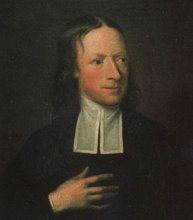
Image from Pitts Theology Library Digital Image Collection, John Wesley appears here in his academic garb as an Oxford don. This frontispiece comes from the first edition of Wesley's Explanatory Notes Upon the New Testament (1755).
Dearest and Most Esteemed Readers
I wish to thank you for your faithfulness and the editors of this humble compendium would like to announce that beginning September 1, 2008 the Journals of John Wesley will begin afresh, with multiple other voices and testimonies added daily so that we, his modern readers, may better understand the world of John Wesley and in particular his trips to the colony of Georgia.
Many fascinating and intriguing pieces information will be interleaved with the Journal of John Wesley including letters from his family, letters of others of the Georgia Colony including James Oglethorpe, along with contemporary and illustrative material and multiple graphics.
I would entertain suggestions on how to best advertise this humble endeavor.
I thank you for your generous and kind attention and may God bless you and keep you.
Many fascinating and intriguing pieces information will be interleaved with the Journal of John Wesley including letters from his family, letters of others of the Georgia Colony including James Oglethorpe, along with contemporary and illustrative material and multiple graphics.
I would entertain suggestions on how to best advertise this humble endeavor.
I thank you for your generous and kind attention and may God bless you and keep you.
Subscribe to:
Posts (Atom)